Course/Energy, Meditation, Cleansing, Protection
Lesson 03
What card energy actually means
Observe first. Interpret second. Research third.
What card energy actually means is this: how the picture sits. Movement, stillness, expansion, contraction, action, receptivity, tension, harmony, growth, stagnation, beginning, ending, transformation, emotional tone, and whether any of that shifts when the question or the neighbours change.
You learn it by looking. Not by memorising a mood for each card.
Qualities you can actually see
Movement: things in transit. Wands in flight. A figure walking. A wheel. Hair in wind. Ask: what is going somewhere?
Stillness: planted feet, a seated figure, a cup that is not being lifted, a landscape that will not hurry. Ask: is this rest, freeze, or presence?
Expansion: open arms, sky, sun, a path that widens, a heart on display. Ask: what is getting larger?
Contraction: huddled body, tight grip, armour, a small room, coins held to the chest. Ask: what is pulling in, and is it protection or a lid?
Action: a hand doing, a sword raised, a hammer, a step. Receptivity: a cup offered, a figure listening, a gift arriving from a cloud. Tension: crossed blades, a clenched jaw, two animals pulling. Harmony: shared cups, a wreath, figures that face each other without a fight.
Growth: plants, a child, a garden, a skill at a bench. Stagnation: a figure who will not turn, water that does not move, the same wall of wands. Beginning: Aces, the Fool, a seed, a first look over a battlement. Ending: Tens, Death, a load put down, a night that is over. Transformation: figures changing state, a moth, a skeleton with a rose, Temperance pouring.
Emotional tone: the weather of the card. Grief-rain. Party. Wary. Tender. Cold. You can feel this before you remember a keyword.
How to identify them in a card
Look at the body first. Is it moving or planted? Open or closed? Doing or receiving?
Look at the environment. Weather, path, walls, water, sky. The scene is doing energy work even when the figure is still.
Look at the objects. Are they in use, on display, threatening, offered, stacked too high?
Look at colour and light if your deck gives you that. Bright is not always happy. Dark is not always doom. Ask what the light is doing.
Then name two or three qualities. Not twelve. If you list everything, you have not chosen. Choosing is reading.
Eight of Wands: movement
Wands in the air, landscape below, almost no person. Movement, action, speed, a message in transit. Expansion across distance. Not much receptivity in the picture; the wands are going. If the question is should I wait, this energy is already arguing for motion. If the question is will I rest, the card may be showing why rest is not happening.
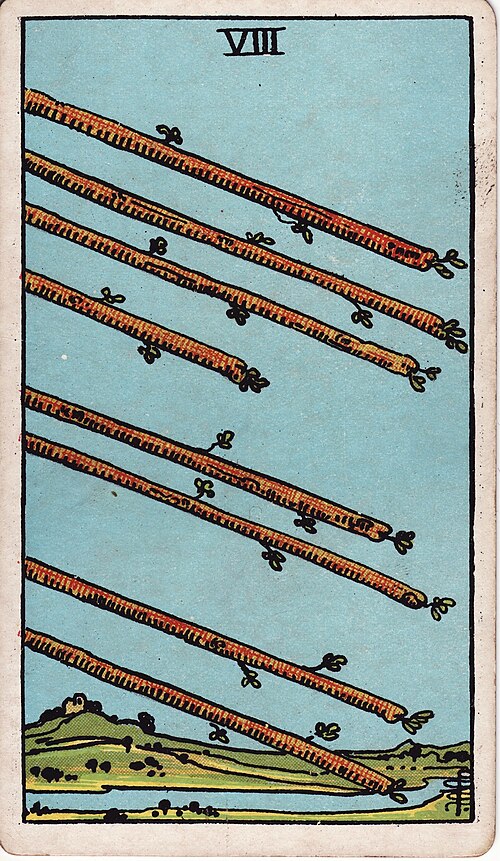
Eight of Wands
Eight
Four of Swords: stillness
A figure on a tomb, hands composed, swords waiting. Stillness. Contraction of the outer life. Receptivity to rest, or to a prayer. Emotional tone can be peace or shutdown. The quality is not the caption rest. The quality is: the action has stopped. Whether that is healing or disappearance is light, shadow, and question.
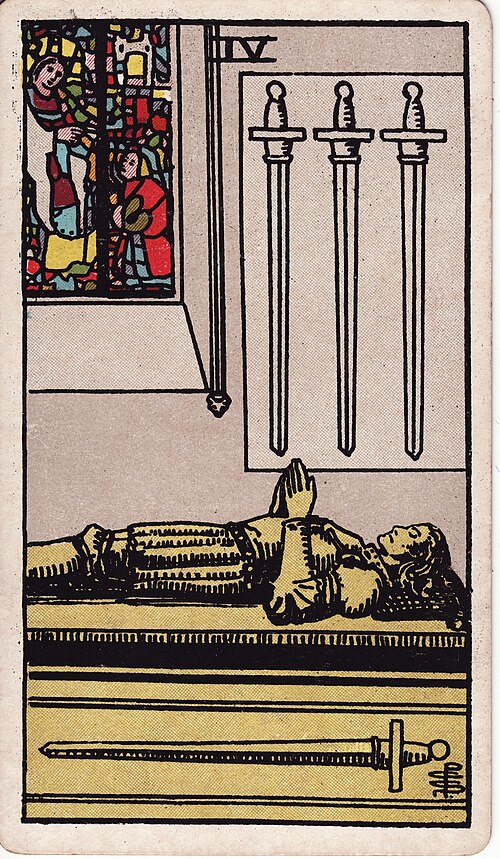
Four of Swords
Four
Ace of Cups: expansion and receptivity
A cup offered, water overflowing. Expansion of feeling. Receptivity. Beginning. Emotional tone: opening. If it lands beside Five of Cups, the expansion may be what the figure has not turned toward yet. Energy shifts when neighbours arrive. Same Ace, different weather.
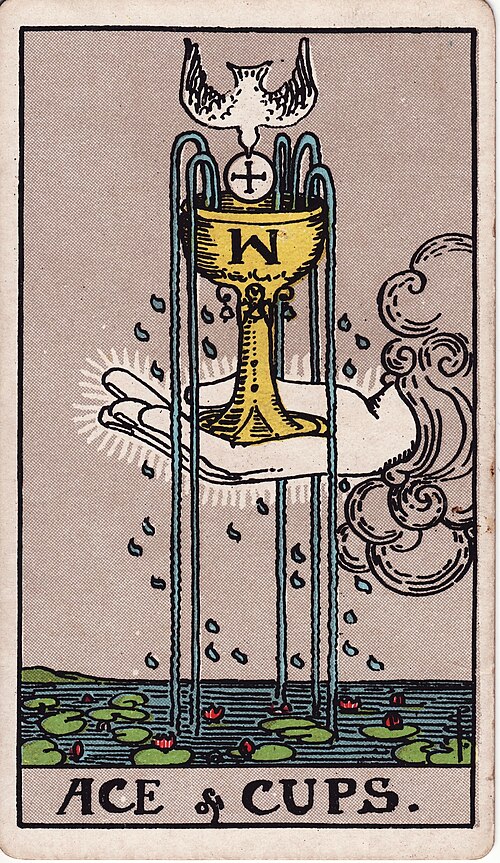
Ace of Cups
Ace
Ten of Wands: tension, stagnation of ease, ending that has not ended
A figure, a load, a town ahead. Tension in the body. Action that has become grind. Growth that went past enough. Ending that still needs a putting-down. Contraction of the world to the next few steps. If this card sits after Eight of Wands, you can feel the shift: speed became burden. That shift is the reading.
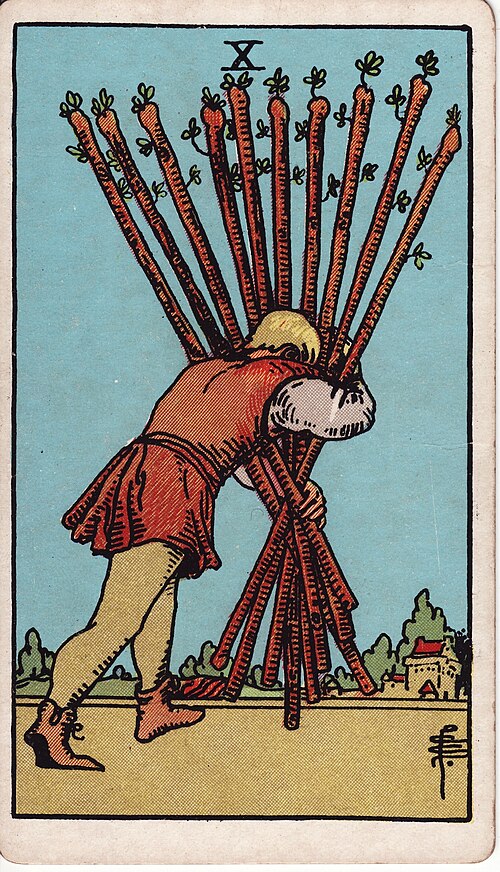
Ten of Wands
Ten
Death: transformation, ending, a strange calm
A skeleton, a rose, figures in different states of yielding. Ending. Transformation. Movement that will not be bargained with. Emotional tone is often quieter than people expect: not a scream, a procession. If you only feel fear, check whether that is the card or you. The card may be still, inevitable, even clean. Your fear is allowed. It is not automatically the energy of the picture.
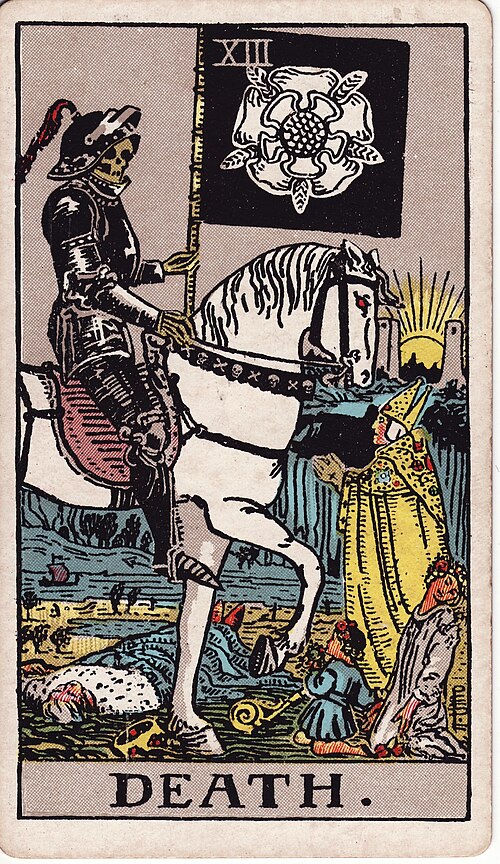
Death
Major · XIII
Shifts: The Sun beside Two of Swords
The Sun alone: expansion, warmth, a self that can play, growth, emotional tone of yes. Two of Swords alone: stillness that is a stalemate, contraction, tension, a refusal to look. Together, the Sun may be what is available when the blindfold comes off, or the Two may be how someone hides from the glare. The qualities talk. That is card energy in a spread, not a list of two captions.
Observe first
Name the qualities
Pull one card. Stay with energy. Pick two or three qualities from this lesson. Point to where you see them in the image.
First look
What hit you first?
Energy
How does this card feel? Still or moving, tight or open?
Movement
What is in motion?
Stillness
What is still?
Body language
What is the body doing?
Light
When this energy is honest and in its body, what is it doing?
Shadow
When it is blocked, extra, avoided, or unconscious, what happens?
Your intuitive response
What do you know, before you tidy it up?
Practice
Energy before the name
Pull a card. Before you even say its name, write three energy words from this lesson. Then look at the picture and point to why. Then see whether a traditional note agrees, argues, or adds. Do this three times this week. Journal the ones that surprised you.
Open the practiceActivity
A pair, a shift
Pull two cards. Write the qualities of each. Then write the shift between them: faster, slower, opening, closing, warming, cooling, loading, unloading. One paragraph as a movement, not two posters.
Reflection