Lesson 02
Describe before you interpret
Observe first. Interpret second. Research third.
Description is accountable to the picture. Interpretation is accountable to the question as well.
If you cannot tell those two apart, you will skip looking every time, because meaning is faster and it makes you feel like a reader.
The distinction that stops you skipping
Description: what is on the card, as if you had to tell someone who cannot see it. A red heart. Three steel swords through it from above. Rain in straight lines. Grey clouds. No figure. No ground.
Interpretation: what you think that means. Heartbreak. Three painful truths. A grief with no one there. He is going to leave. That last one is already a story, and it may be your fear, not the card.
You need both. Description without interpretation is a catalogue. Interpretation without description is a guess wearing a shawl. The Method is: say what you see, then say what you make of it, and keep them in different sentences so you can tell when you jumped.
How you know you jumped
If your first sentence contains will, should, always, or a person's name, you have probably interpreted. If your first sentence contains a colour, a hand, a building, weather, an object, you are still describing.
Jumping is not a crime. It is a habit. The training is to catch it, go back to the picture, and then interpret on purpose.
Worked example. Two columns.
Card: Eight of Swords. Description: a standing figure, bound, blindfolded, eight blades in the ground, a castle on a far rise, puddles, a grey sky. The bindings look loose if you look twice.
Interpretation jumped too soon: I am trapped, this is anxiety, I cannot leave. Maybe. The picture has not been given a chance to mention the castle, the space between swords, or the loose bind.
Interpretation after description: thought has surrounded this person, sight is restricted, and the picture still includes a way the body might step. In a question about a job, that might be a contract in the mind, not a locked door. You could not have got there without describing first.
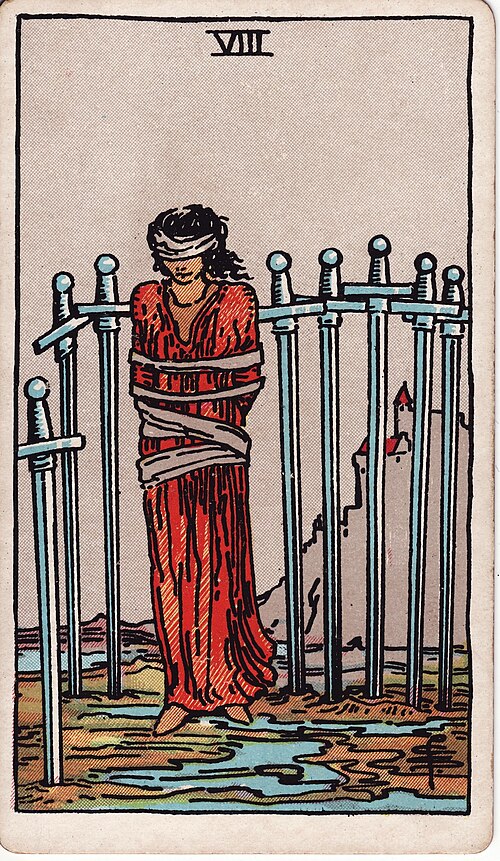
Eight of Swords
Eight
Activity
Two headings, one card
Pull a card, or open the Eight of Swords. Write under Description only what a camera would get. Then, on a new heading, Interpret, write what you think it is doing in a question you name. If a meaning sneaks into the first heading, move it.
Practice
Describe aloud before you mean
In the Practice Room, draw a card. Speak the description out loud for a full thirty seconds before you allow yourself a meaning. Time it. Then interpret. Then research. This will feel silly. It will make you better.
Open the practiceReflection