Course/Chakras and Body Awareness/The seven centres
Part 04
Heart
Observe first. Interpret second. Research third.
The theme
Heart, in this map, is connection. Love, grief, generosity, the ability to let someone in and to let someone go. The question: what is my relationship with this, and what is opening or closing?
Not every Cups card is heart, and not every heart sensation is a message. Notice. Do not leap. Heart is bigger than romance. Grief lives here. So does a boundary that is also love.
Where people point
In this educational map, people usually point to the centre of the chest, the breastbone, the upper chest. Use that as a reminder of connection, not as a medical fact about your body.
Warmth, a crack, a tightness, a breath that will not go low: all of that can live here. If you have chest pain that worries you, you do not interpret it. You get it checked. Then, on another day, you can still use this map as a vocabulary for feeling.
Colour in this map
Green is the traditional teaching colour in this map. Leaf, moss, a garden path. Pink is sometimes taught beside it as tenderness. Both are memory aids, not medical facts, and not a rule for your clothes.
If green never speaks to you, you can still work with heart as connection and grief. Colour is a teaching tool. It's not a test.
Body awareness
Chest, breastbone, the breath that will not go low, a warmth, a crack, a tightness that is not always a no. Grief lives here a lot. So does relief.
If you have chest pain that worries you, you do not interpret it. You get it checked. Then, on another day, you can still use this map as a vocabulary for feeling.
Light
Connection that is true. Grief that is allowed. Generosity without a debt. A closed heart that is a boundary, not a punishment. Warmth that includes yourself.
Heart light can look like a message you actually send, a cry you stop interrupting, time with a person or an animal, a walk among plants, kindness that has a door.
Shadow
Performing love. Armour as identity. Rescue. Bitterness. Openness with no door. Heart as a shop window. Using other people's needs to avoid your own.
Shadow also lives in treating heart as only romance, and missing grief, generosity, and the boundary that is also love.
Nourishing foods in this map
Some traditions pair this centre with green leaves, herbs, green tea, and food you cook as care, including for yourself. That pairing is a way of paying attention to connection. It is not medicine. Eating them will not physically heal a chakra.
Eat like a person. A meal made kindly is heart practice. A salad eaten as a spell is not. Do not treat a fruit as a cure.
Practices you can actually do
Meditation: sit. Hand on the chest. Three breaths without making them a story. Let whatever is there be there, including nothing.
Visualisation: green light in the chest if colour helps, or a room with a door you can open and close. Warmth that includes you.
Movement: walk among plants if you can. Uncurl the chest without forcing a pose. Stretch the arms. Breathe lower than the throat.
Reflection: ask what is opening or closing. Name grief as grief. Name love as a practice, not a fate. Write three lines and stop.
Energy work and self-care: send the message, or do not, on purpose. Time with someone living. Kindness toward your own chest. A closed door when a closed door is love.
How this can meet tarot
Lovers. Ace of Cups. Three of Swords. Four of Cups. Six of Cups. Nine of Cups. Ten of Cups. Empress. Star. Three of Swords can be heart theme as pain made visible. Ten of Cups can be heart theme as belonging. Neither card is a chakra diagnosis. They are pictures that can sit in this conversation.
Three of Swords, a chest in the rain
A heart, three blades, weather. You do not need chakra language to read this. If the centre helps you stay with feeling instead of sprinting to a story about betrayal, use it. If it becomes my heart chakra is under attack, you have left the Method and entered a drama. Come back to rain, blades, and the question.
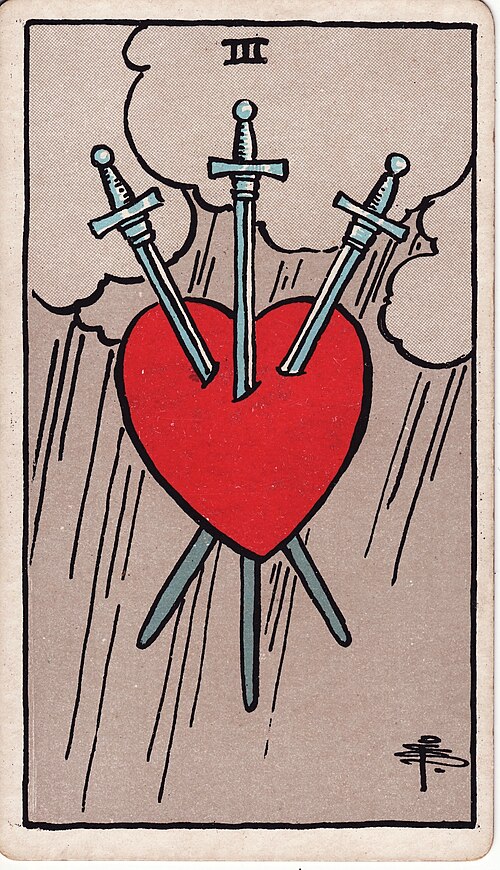
Three of Swords
Three
Practice
Chest, then look
Sit. Breathe into the chest three times without making it a story. Pull a card. Write what the card is doing, then whether your chest changed. If it did not change, write that. Unchanged is a result. Then interpret the card, not the chest, unless they clearly agree.
Open the practiceReflection